Why it matters
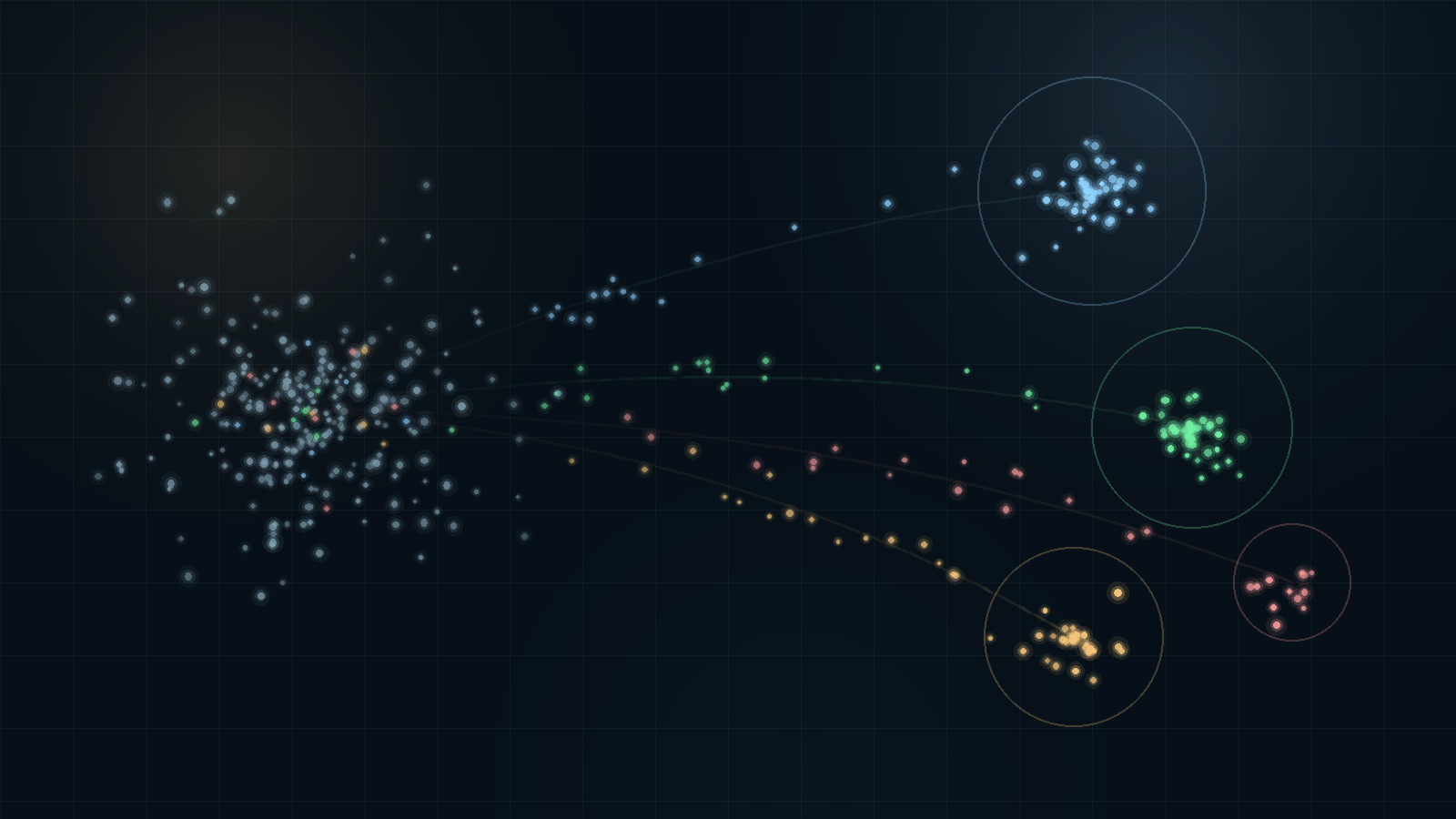
Some bugs look impossible for years because they are not one bug. A crash signature, a flaky test, a rare race, a contradictory set of research results — each can be a mixed population: several distinct causes producing the same visible syndrome. Single-case deep dives then loop forever, because every promising hypothesis is "disproved" by a counterexample that actually belongs to a different cohort.
The pattern comes from epidemiology: study the population before the patient. Split cases by discriminating features first, and each cohort suddenly has a coherent, checkable cause — including the rare one hiding behind the common one.
What is inside
The skill walks an agent through a fixed pipeline: define the syndrome and population boundary, assess data quality, extract discriminating features, build a cohort map, then test same-cohort counterexamples so falsification stays honest within each group.
Each cohort gets its own hypothesis, a rate and plausibility check ("is this frequency even possible under that cause?"), a next decisive signal, and a fix path. The run ends with an observability upgrade — what to log or capture so the next occurrence classifies itself — and explicit residuals: cases that still fit no cohort.
How to use it
Cohort Pattern Diagnostics ships as a single SKILL.md plus manifest. In Codex-style skill environments, copy the folder into your skills directory and invoke it when a repeated anomaly smells like a mixed population. In any other agent setup, paste or reference SKILL.md as a reusable diagnostic instruction.
Reach for it when one repeated crash has no coherent cause, when logs are too noisy to classify, when a rare hardware fault or race seems impossible but keeps recurring, or when research evidence contradicts itself because source classes, methods, or datasets may be mixed. For a single well-behaved bug with one clean reproduction, ordinary root-cause analysis is still the right tool.
Works with your agent stack
The skill is deliberately portable: anything that can read a SKILL.md instruction can run the protocol. That includes agentic coding tools such as Claude Code, Cowork, OpenAI Codex CLI, Cursor, Cline, Roo Code, Windsurf, the GitHub Copilot coding agent, Gemini CLI, Aider, OpenHands, and Goose — and orchestration frameworks like LangGraph, CrewAI, and AutoGen, where it slots in as a reusable diagnostic prompt for a worker or reviewer agent.
No plugin API, no lock-in: the whole contract is a markdown file. If your harness supports skills natively, install it as one; if not, inject it into context when the anomaly pattern appears.
Lineage and honest limits
The skill was inspired by OpenAI's "Core dump epidemiology: fixing an 18-year-old bug", where population-level crash analysis separated one apparently impossible bug into distinct causes — including a bad physical host and an old GNU libunwind race. This repository is an independent generalization of that diagnostic pattern, not affiliated with OpenAI, released under MIT.
Honest limits: cohorting is a lens, not an oracle. Bad discriminating features produce confident nonsense, tiny populations resist meaningful splits, and residuals must stay visible rather than be forced into the nearest cluster. The skill's discipline — same-cohort counterexamples, rate checks, explicit residuals — exists precisely to keep those failure modes loud.
 Whimsea
 Daybreak
 TinyTints